Together, they do everything. ͏ ͏ ͏ ͏ ͏ ͏ ͏ ͏ ͏ ͏ ͏ ͏ ͏ ͏ ͏ ͏ ͏ ͏ ͏ ͏ ͏ ͏ ͏ ͏ ͏ ͏ ͏ ͏ ͏ ͏ ͏ ͏ ͏ ͏ ͏ ͏ ͏ ͏ ͏ ͏ ͏ ͏ ͏ ͏ ͏ ͏ ͏ ͏ ͏ ͏ ͏ ͏ ͏ ͏ ͏ ͏ ͏ ͏ ͏ ͏ ͏ ͏ ͏ ͏ ͏ ͏ ͏ ͏ ͏ ͏ ͏ ͏ ͏ ͏ ͏ ͏ ͏ ͏ ͏ ͏ ͏ ͏ ͏ ͏ ͏ ͏ ͏ ͏ ͏ ͏ ͏ ͏ ͏ ͏ ͏ ͏ ͏ ͏ ͏ ͏ ͏ ͏ ͏ ͏ ͏ ͏ ͏ ͏ ͏ ͏ ͏ ͏ ͏ ͏ ͏ ͏ ͏ ͏ ͏ ͏ ͏ ͏ ͏ ͏ ͏ ͏ ͏ ͏ ͏ ͏ ͏ ͏ ͏ ͏ ͏ ͏ ͏ ͏ ͏ ͏ ͏ ͏ ͏ ͏ ͏ ͏ ͏ ͏ ͏ ͏

There's a moment in cooking when a recipe clicks, when the sauce coats the back of a spoon exactly right, or a braise comes together into something you didn't expect. It rarely has to do with technique alone. More often, it has to do with the right pan.
Most kitchens have one or the other, a Sauté Pan picked up somewhere, a Saucier inherited or gifted. But few people know exactly why each one exists, or what they unlock when you use them for what they were actually built for.
They're not the same pan. They don't do the same thing. And once you understand the difference, you'll wonder how you cooked without both.
|
|
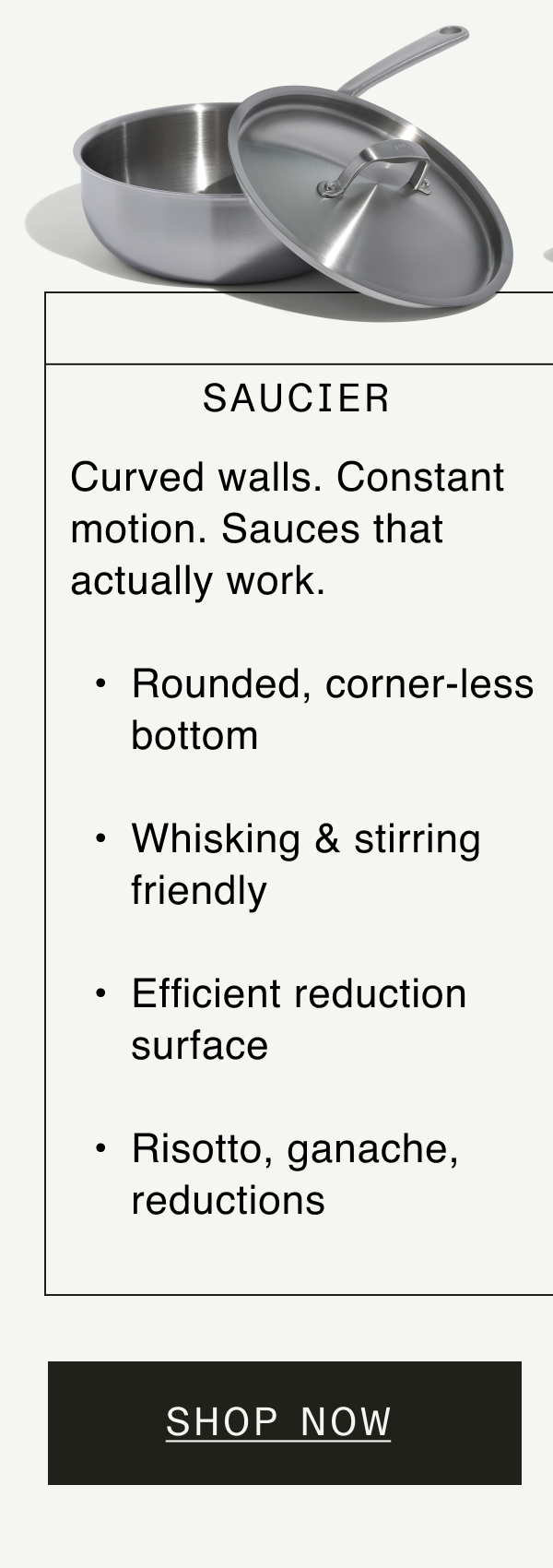
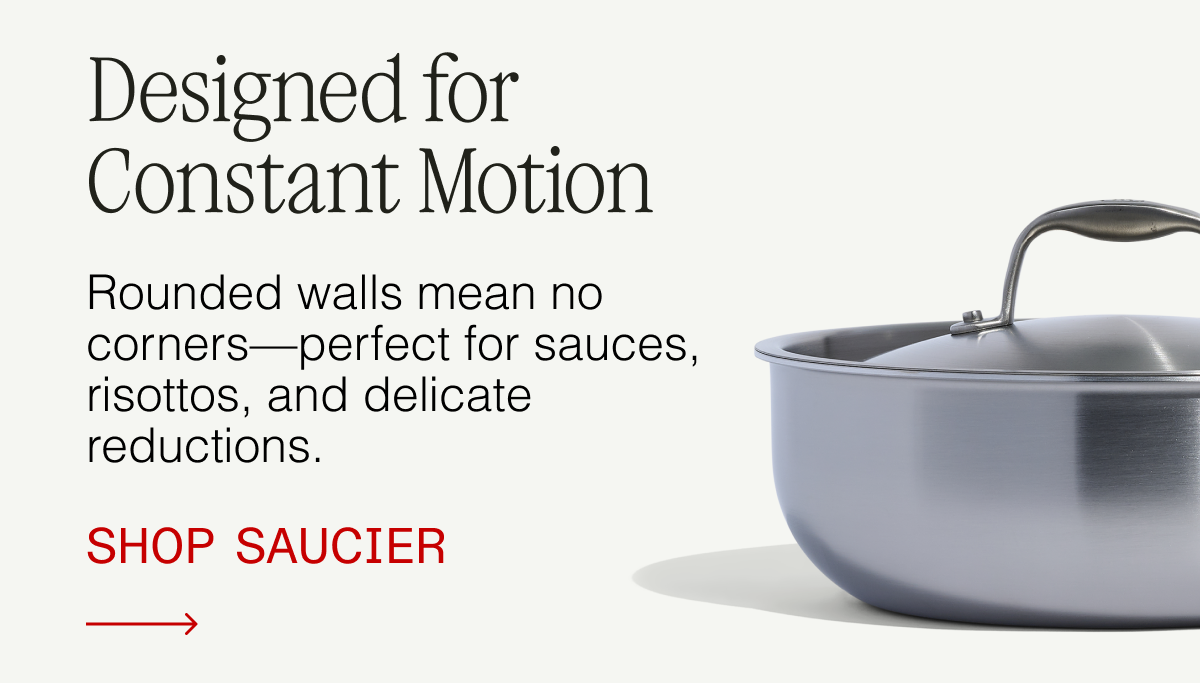
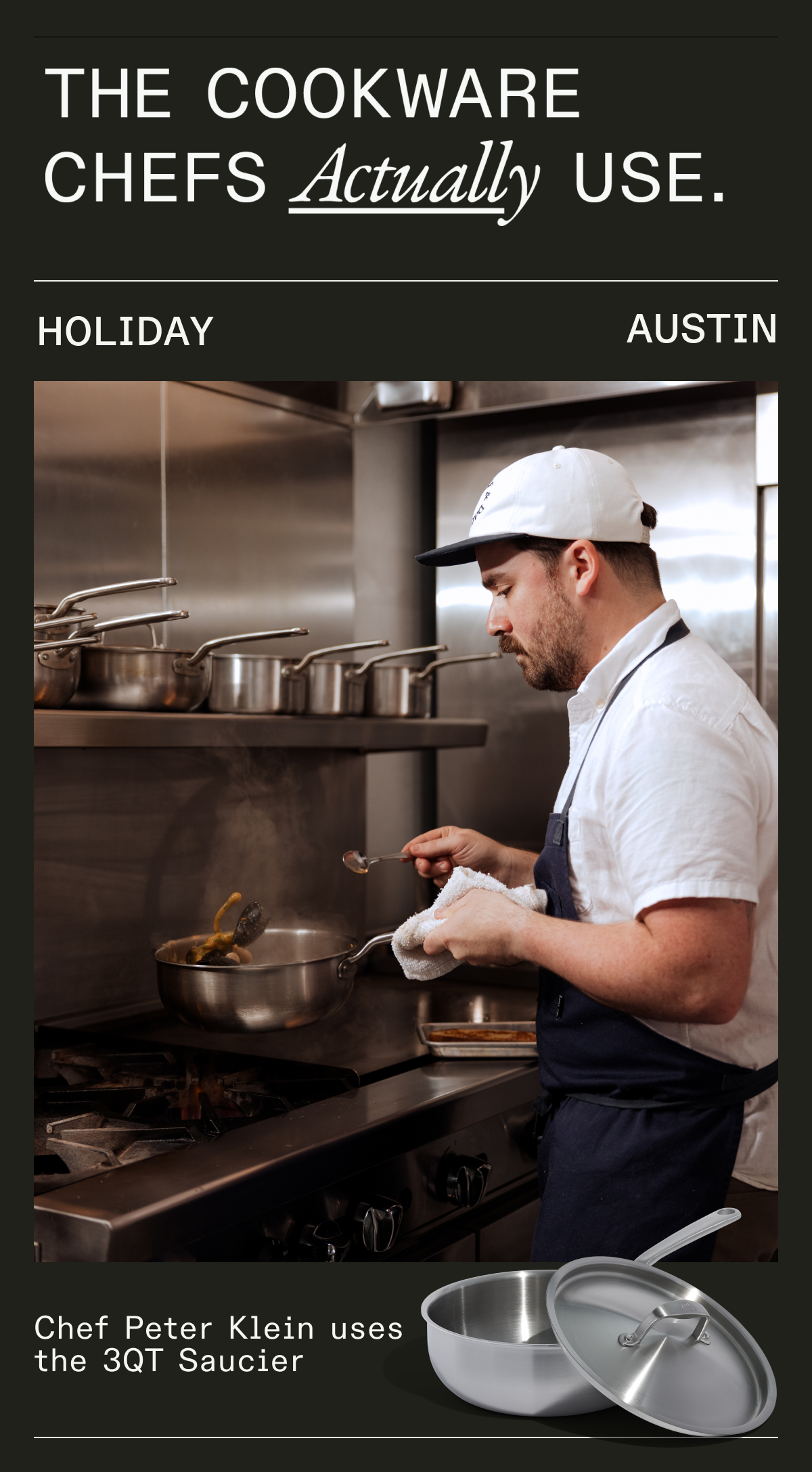
The Saucier takes its name from the chef on the line responsible for all things sauce, and its shape reflects that purpose exactly. A curved, cornerless bottom means no burned spots hiding in the edges, no stuck risotto grains, no cream sauce scorching where you couldn't reach with a whisk.
It's also one of the most satisfying pans to cook in. Wide enough to reduce efficiently. Curved enough that a whisk can move freely in every direction. The kind of pan that makes you want to make ganache on a Tuesday.
Reach for the Saucier when you're making:
- Risotto (no corners = no stuck grains)
- Pasta finished in its own sauce
- Béchamel, hollandaise, or any cream-based sauce
- Caramel, ganache, lemon curd
- Reductions, gravies, and stovetop jams
|
|
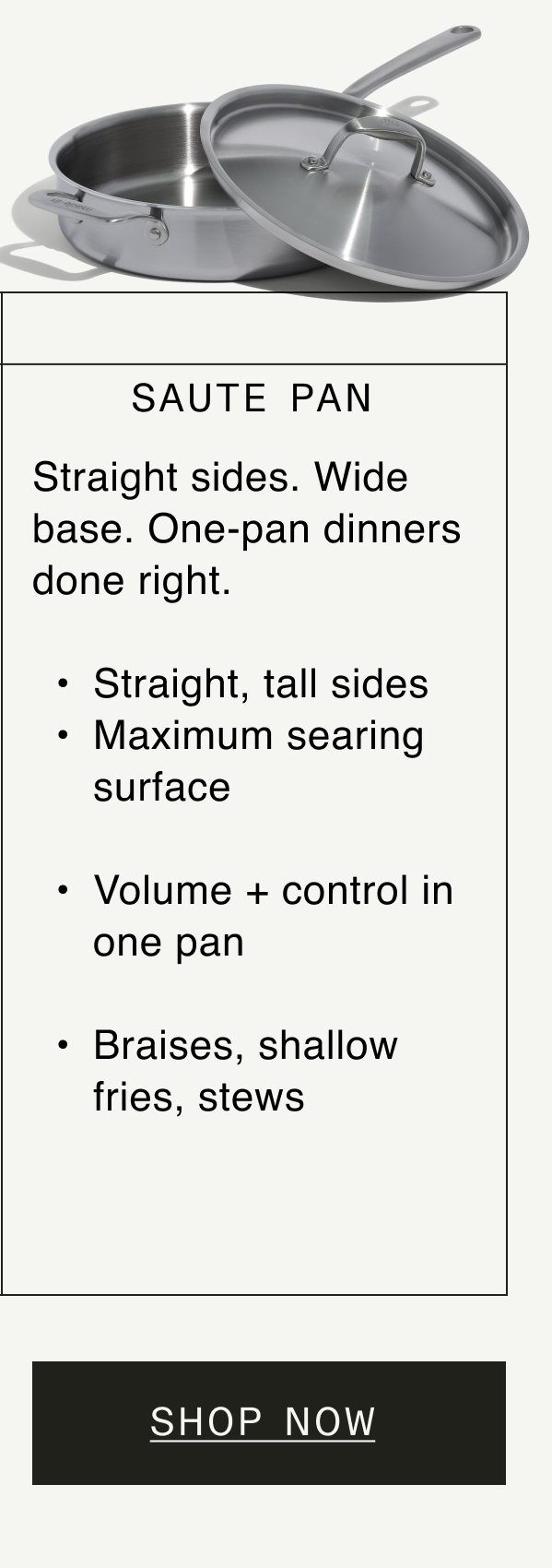
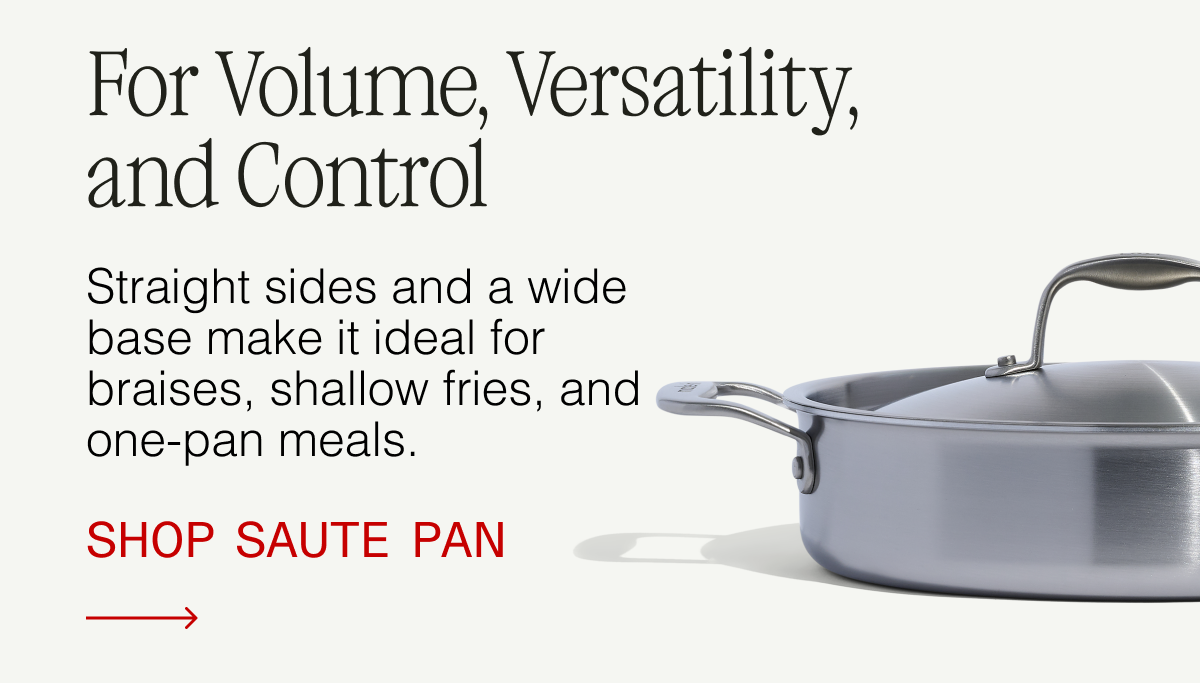
If the Saucier is built for finesse, the Saute Pan is built for confidence. Straight, tall sides and a wide flat base mean serious surface area, ideal for getting a real sear, building fond for a braise, or shallow-frying without the splatter.
It's crafted in Italy with 5-ply construction, responds quickly to temperature changes, and pours cleanly from a rolled rim. The Stay Cool Handle™ means you move fast when the pan gets hot, which it will.
Reach for the Saute Pan when you're making:
- Shakshuka, braises, and one-pan dinners
- Shallow fries and seared skin-on fish
- Sautéed vegetables with real browning
- Chilis and stews that start with a hard sear
- Anything that needs volume and control in one pan
|
|
|
|
|








Sem comentários:
Enviar um comentário